

Ce contenu est également disponible en :
Les Allemands ayant participé à la Nuit de cristal furent-ils punis de manière appropriée ?
Afin d’innocenter Hitler et le régime nazi, les négationnistes de la Shoah affirment que :
The German perpetrators who committed arson, murder, assault, and looting during the Kristallnacht pogrom were appropriately punished in courts of criminal law. This proves that the Nazi regime didn’t instigate or approve of the pogrom.
For example, Holocaust denier David Irving claims that Rudolf Hess, the head of the Nazi party and a member of Hitler’s inner circle, “ordered the Gestapo and the party’s court to delve into the origins of the night’s violence and turn the culprits over to the public prosecutors.”[1]
Les faits sont les suivants :
Les éléments de preuve montrent que les participants allemands ne furent pas sévèrement punis — quand ils le furent tout court — après la Nuit de cristal. La grande majorité des auteurs de violences ne furent pas poursuivis de quelque façon que ce soit. Seuls les cas de deux hommes furent envoyés au système judiciaire pénal, tous deux pour le crime de « honte raciale ». Les éléments de preuve montrent que tous les autres crimes – jusqu’au meurtre de Juifs – furent pardonnés ou ignorés.
La « justice » et les criminels allemands après la Nuit de cristal :
On November 10, 1938, the Ministry of Justice instructed its officials that crimes involving “material damage to synagogues, cemetery halls and graveyards through fire, blowing up etc.” as well as “damage to Jewish shops” would not be prosecuted.[2] Only cases of murder, grievous bodily harm, and the destruction of Jewish homes committed out of “personal and base motives” would be considered.[3] The investigation of this small number of crimes was to be conducted in Nazi courts.[4] In 14 cases—including the brutal murder of 21 Jews—Hitler personally halted the proceedings. The worst punishment these murderers received was an official warning and a ban from any Nazi party office for three years. The great majority of offenders received milder punishments, or none at all.[5] In fact, only two cases were prosecuted in the criminal courts. Both of these cases involved the rape of Jewish women. These men had committed a crime according to Nazi German law. That crime was not rape, but ‘racial defilement’ (Rassenschande)—that is, they had compromised the Nazis’ ideal of racial purity.


Conclusion :
Contrairement aux affirmations des négationnistes de la Shoah, il n’est pas vrai que le gouvernement nazi punissait les auteurs allemands des crimes commis pendant la Nuit de cristal. La grande majorité des auteurs de violences n’ont pas été poursuivis du tout. Seuls deux hommes ont comparu devant le système judiciaire pénal, tous deux pour le crime de « honte raciale ». Les éléments de preuve montrent que tous les autres crimes – jusqu’au meurtre de Juifs – ont été pardonnés ou ignorés par le gouvernement nazi.
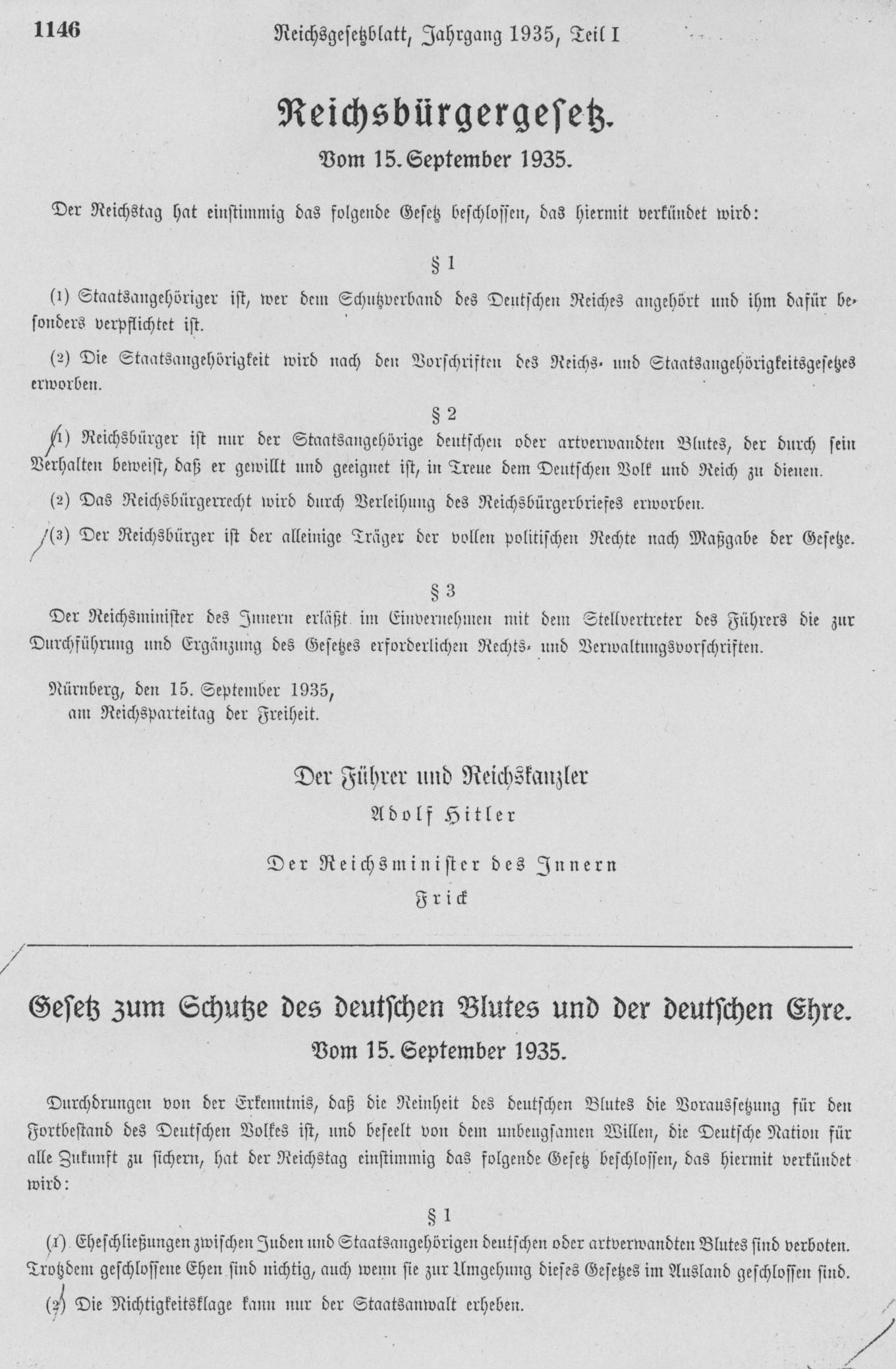
Reichsgesetzblatt (RGBl) I 1935, S. 1146 (part one of two), [Public domain], via Wikimedia Commons

NOTES
[1] David Irving, Goebbels: Mastermind of the Third Reich (Focal Point, 1996), p. 501. This entire book can be downloaded in PDF at http://www.fpp.co.uk/books/Goebbels/.
[2] Richard J. Evans, David Irving, Hitler and Holocaust Denial, Section (4)(4.3)(c)(iii)(E)(2) at www.hdot.org.
[3] Richard J. Evans, David Irving, Hitler and Holocaust Denial, Section (4)(4.3)(c)(iii)(E)(1).
[4] Richard J. Evans, David Irving, Hitler and Holocaust Denial, Section (4)(4.3)(c)(iii)(E)(2).
[5] Richard J. Evans, David Irving, Hitler and Holocaust Denial, Section (4)(4.3)(c)(iii)(E)(3).