

يتوفر هذا المقال أيضًا باللغات:
كيف يتسنى لنا معرفة أن أدولف هتلر منح الإذن بتنفيذ مذبحة ليلة الكريستال (كريستال ناخت)؟
ادعاءات العديد من الناكرين لمحرقة الهولوكوست كمحاولة منهم لتبرئة أدولف هتلر:
Adolf Hitler did not know about and did not authorize the Kristallnacht pogrom. Holocaust denier David Irving asserts that Josef Goebbels, the Minister of Propaganda, initiated the pogrom without Hitler’s knowledge or permission.[1]
تتمثل الحقائق فيما يلي:
يُظهر الدليل المتوفر أن أدولف هتلر علم بشأن مذبحة ليلة الكريستال (كريستال ناخت) وقد منح الإذن بتنفيذها. في وقت مبكر من مساء 9 نوفمبر من عام 1938، أبلغ جوزيف غوبلز هتلر بوجود بوادر تحركات لتنفيذ المذبحة واسعة الانتشار. وقد منح هتلر الإذن في مواصلة أعمال العنف الناجمة عن مذبحة ليلة الكريستال (كريستال ناخت) بل وزيادتها.
الحقائق المتعلقة بمدى معرفة هتلر عن مذبحة ليلة الكريستال (كريستال ناخت) ومنحه الإذن بتنفيذها:
Nazi German diplomat Ernst vom Rath was assassinated by a Jewish teenager in Paris on November 9, 1938. Vom Rath died at 5:30 p.m. By early that evening, several cases of antisemitic violence had already take place in Germany. Josef Goebbels, the Nazi Minister of Propaganda, was informed that disturbances had broken out in two locations in Germany. Hitler and Goebbels discussed these incidents before attending a dinner together at the Old Town Hall in Munich. Several eyewitnesses reported that Goebbels and Hitler had an intense discussion together at dinner that night. Goebbels’ diary entry for that day read: “I go to the Party reception in the Old Town Hall. Colossal activity. I brief the Führer about the matter. He orders: let the demonstrations go on. Withdraw the police. The Jews must for once feel the people’s fury. That is right.”[2] Hitler left the dinner around 9:00 p.m., strangely allowing Goebbels to give the speech that Hitler himself had given for the previous five years. The report of the Supreme Nazi Party Court, held after the pogrom, stated that Goebbels gave a rousing speech in which he informed the Gauleiters (party district leaders) of the disorder already erupting in parts of Germany. Attendees recalled that Goebbels invoked Hitler’s approval of the violence, including future violence against Jews: “on his briefing, the Führer has decided” that future demonstrations should not be stopped.[3] The Gauleiters at the meeting understood their orders as such: “the Party should not appear to the outside world as the originator of the demonstrations, but should in reality organize them and carry them out.”[4] After Goebbels’ speech, they rushed to the telephones and issued orders to their subordinates across Germany that they should directly incite and/or encourage the violence.
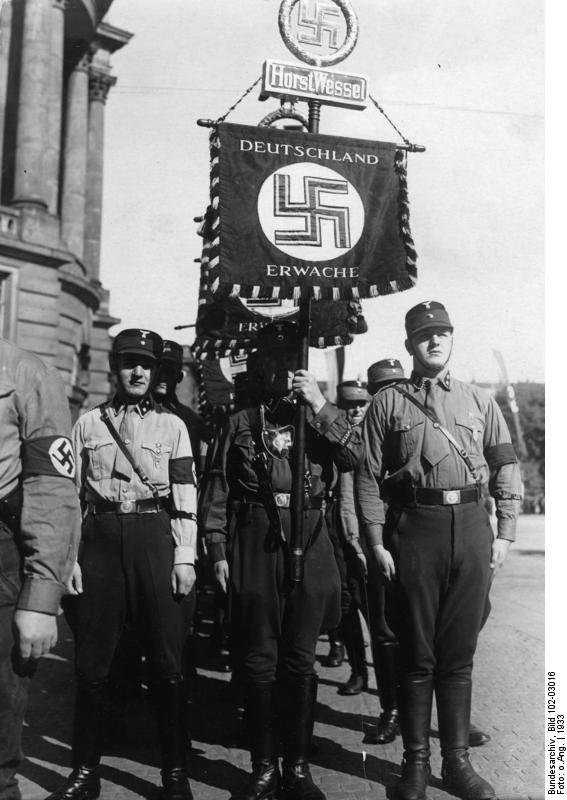
Bundesarchiv, Bild 102-03016 / CC-BY-SA 3.0 [CC BY-SA 3.0 de (http://creativecommons.org/licenses/by-sa/3.0/de/deed.en)], via Wikimedia Commons

الاستنتاج:
خلافًا لادعاءات ناكري محرقة الهولوكوست، علم أدولف هتلر بشأن مذبحة ليلة الكريستال (كريستال ناخت)، وقد منح الإذن بتنفيذها. يؤكد الدارسون حسنو السمعة أن الدليل يشير إلى الاستنتاج التالي: غوبلز أبلغ هتلر باحتجاجات معادية للسامية في وقت مبكر من 9 نوفمبر من عام 1938؛ وفي أثناء حفل العشاء الذي حضره هتلر مع غوبلز، منح الإذن بتنفيذ مذبحة واسعة الانتشار. تم تنظيم هذه العملية والتشجيع عليها من جانب عناصر SA (قوات الصدمة الألمانية) ووحدة SS. غادر هتلر حفل العشاء حتى لا يُحمّله المجتمع الدولي المسؤولية المباشرة لأحداث الدمار والعنف الناجمة. وبموافقة هتلر، ألقى غوبلز الخطاب الرئيسي الخاص بهتلر بالنيابة عنه، حيث أثار حماسة المسؤولين الرئيسيين التابعين للحزب النازي للبدء في العمل. وقد بدأوا في تنفيذ الخطة بعد الانتهاء من سماع خطابه على الفور.
NOTES
[1] Richard J. Evans, David Irving, Hitler and Holocaust Denial, Section (4)(4.3)(c)(ii)(A)(2) at www.hdot.org, “Expert Witness Reports.”
[2] Diary entry of Josef Goebbels, November 9, 1938 as cited in Richard J. Evans, David Irving, Hitler and Holocaust Denial, Section (4)(4.3)(c)(ii)(A)(3-5).
[3] Richard J. Evans, David Irving, Hitler and Holocaust Denial, Section (4)(4.3)(c)(ii)(B)(5).
[4] Richard J. Evans, David Irving, Hitler and Holocaust Denial, Section (4)(4.3)(c)(ii)(C)(3).